As most of you probably know, Thanksgiving is coming up in one day (for me) or two days (in America). Try explaining to Koreans that Thanksgiving is always on a Thursday so there's no real day of the year they can mark on their calendars. Also, in America we have the Easter four: Fat Tuesday, Ash Wednesday, Good Friday, and Easter Sunday. I don't even know how those are decided. Not to mention our Monday holidays which very few people actually celebrate. What ever happened to normal holidays like Christmas, which is December 25th every year. Or, better yet, holidays like the 4th of July and Cinco de Mayo, which tell you the day in their very names! Anyway, confusing as it may be, it's Thanksgiving time and I didn't realize it until I saw it on my Facebook news feed. I don't know how I remembered any holidays, especially birthdays, before Facebook.
Anyway.... since my parents divorced about ten years ago, my family holidays have been a muddled mess of calendar days regardless of the confusing nature of day-of-the-week-based holidays. So, I don't really consider the day itself as important as the people and the activities that go along with it. So, if I have five Christmases on five different days like I did once two or three years ago, that's totally fine with me. Plus, for me, Thanksgiving has never been a huge deal, so not celebrating it is also fine with me. It's just... strange not to have everyone else around me celebrating it. It's strange to have the urge to draw an elaborate hand turkey and show it off to... all the people who have no idea what it means. For me, tryptophan, mashed potatoes, and pumpkin or rhubarb pie after a long day of watching older family members cook and playing with cousins and/or my brother makes my mouth water and my heart pang. Remember when dressing up like a pilgrim was a drag and dressing up like an Indian made you a cool kid for the day? Remember when hand turkeys were sacred expressions of individuality rather than cute, silly things? Growing older, remember when you first got to drink wine or champagne at dinner for Thanksgiving, Christmas, or New Year's Eve? Even though most of us hated it, we pretended to like it because it was oh-so-forbidden. I spent one Thanksgiving with my best friend's family in high school, and there were so many people there and so much delicious food. She and I set the table and helped out with a couple other things, and I felt so useful and needed and like I was part of something special- something that only happens once a year. Last year, my roommate and I invited my mother and brother, and some of my English students (international students studying at our university) to our apartment and hosted a traditional Thanksgiving dinner. I want to do that type of thing here, but I don't really know how to cook the food in the tiny gas-fire oven with approximate temperature in Celsius, and I wouldn't know where to buy it in the first place. Plus, I'm sure most is expensive. Maybe next year or the year after that I'll try.
I guess what I'm trying to say is, have a happy Thanksgiving, all you Americans. I really miss it. Not celebrating Easter or Independence Day was okay, but now I'm really missing the food holiday. Whether you realize it or not, food is one of the most important aspects of culture. Every (excuse the possibly inaccurate generalization) society in the world has rituals surrounding the consumption of food, including table manners, distribution of responsibility, and even restaurant manners are different. For instance, in Korea, one must call the waiter or push a call button for service. In America, waiters come to the table periodically and it's embarrassing to call one. Also, most importantly, what we like to eat is largely culture-based. In Korea, more than half of the food contains red pepper (the spicy one, not bell pepper) powder, paste, and/or peppers themselves. Most Koreans don't feel like they are eating if they don't have kimchi and rice, and prefer to have more choices of side dishes as well. In America, side dishes are included on the same plate as the main dish, because the utensil you eat with must not touch food other people might eat. There are separate serving utensils. Your food is all together on one plate, but it is seen as barbarian to mix it together. In Korea, you usually only need chopsticks and spoons, and everyone has a small dish on which to combine ingredients (like lettuce, pork, and kimchi) or to let food cool, or to avoid spilling soup on the table. So, your spoon or chopsticks make a line from the shared dish in the middle of the table to your dish (or just above it) to your mouth. Every type of food is served on a different dish. Therefore, if you are served a dish consisting of separate parts, you mix them all together before eating so it's all one dish. For instance, bibimbap, one of the most popular Korean foods in the world. It's basically rice, some vegetables, beef, and a fried egg stacked in a bowl. You add red pepper paste and mix it together before eating with a spoon. If you use chopsticks to pick out each piece separately, you are quite strange indeed. Another point about food is that culture also determines (mostly) what we are willing to eat. Yes, most of us like kung pao chicken and fortune cookies, but have you ever tasted real Chinese food? Some menu items include bugs or parts of animals Americans never thought of as edible. Even here in Korea, dog meat was traditionally eaten, and is still available. Many younger people refuse to eat it on moral principle, and others only eat it on special occasions on which dog meat is the required traditional food. But, if you think about it, how is eating a dog any different from eating a pig? Pigs are smart, clean, and make great, family friendly pets. The reason pigs that live outside roll in the mud is that they don't sweat, so they use the mud to act as sweat, allowing their body heat to escape by transferring to the evaporating water. They don't have tusks like elephants do to splash water on themselves. Anyway, dogs weren't usually pets in Korea before Western influence incited their popularity. I intend to try dog meat because I'm curious, just like I've tried almost every other food offered to me here. It's not a moral thing, it's just food. And no, Koreans aren't going to eat your dog, just like you wouldn't eat your neighbor's pet pig, chicken, cow, deer, fish, etc.. That's just xenophobic thinking.
It's interesting that an American with a Hyundai car and an LG cell phone and a Samsung TV could think that a Korean would eat their dog. Before I moved here, people asked me if there were cars in Korea, or if I was going to North or South Korea, or what language people speak in Korea. Funny to think that a few years ago, I didn't know anything about Korea either. What an oddly inspirational country!
A few years ago, I would be eagerly awaiting a week of Thanksgiving leftovers. I wonder what I'll have for dinner tomorrow.... I wonder if I can even buy turkey for a reasonable price here.....
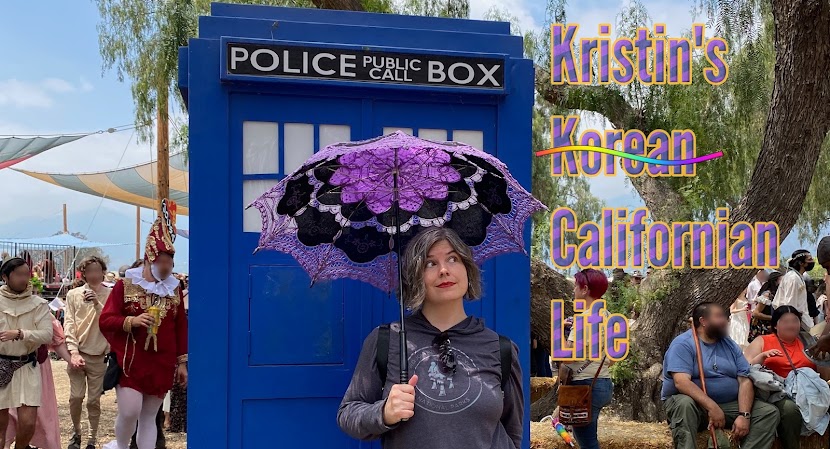
On March 26, 2009, I left my life in America and moved to South Korea. I put my worldly possessions into two suitcases and a backpack and got on a plane. On December 8, 2012, I returned not to my hometown of Detroit, but to Silicon Valley, California, where I married an Indian engineer. In 2020, I divorced and moved to southern California. In this blog are my successes, failures, and observations of life in different cultures.
Wednesday, November 25, 2009


Saturday, November 7, 2009
Andong- the little big city explained
This is what I meant to write last time, but instead I ended up writing about visa inequality.
Andong is, compared to anywhere I have ever lived in America, a big city. But, Koreans laugh a little when they think of living in Andong, because it's the countryside. With busy streets and very few buildings less than three stories, how is this a small town? There are looming apartment buildings and the people who live in them in constant motions on the sidewalks. There are bars, restaurants, grocery stores, clothes stores, bakeries, flower shops, cafes, billiards, PC rooms, motels, convenience stores, a movie theater, and much more all in walking distance from the apartment I share with my boyfriend and his mother. And, we can get on a bus and go pretty far away to get to downtown, which is even more bustling. To me, that is a big city.
Now here are some facts to consider (from the wonderful CIA World Factbook):
South Korea has a land area of 96,920 sq km, much of which is mountainous and therefore almost uninhabitable. That makes South Korea basically a mountain range/peninsula "slightly larger than Indiana".
The population of South Korea is about 48,508,972 people (25th in the world). Women bear an average of 1.21 children, and the population growth rate is .266%, making it 178th in the world. 81% of those people (growing at a rate of .6% a year) live in cities. Notice the correlation between density (read the next paragraph) and growth.
Population density is difficult to describe in Korea because of the large amount of uninhabitable land, but here's a useful tool: The National Atlas of Korea. We live in Gyeongsangbuk-do, if you want to look at the chart. The national average population density is 474 people/square km, according to this source. Other sources report it even higher. According to Nations Online, it has the 15th highest density in the world.
Again according to the CIA factbook, The United States has a population of about 307,212,123 people (6.3 times more than South Korea) and a land area of 9,161,966 sq km (94.5 times larger than South Korea). Doing simple math with those numbers gives a population density of about 34 people/square km.
For every one person you bump into in America, there are 14 people in South Korea.
Not to make this read like a textbook, but those are some interesting numbers. Those numbers can easily explain why Andong is big to me, but small to Koreans.
In 2000, the population of Detroit, MI metropolitan area (my home) was 4,456,428. Just Detroit has a population of 912,062, according to this source. Detroit, although quickly shrinking and more or less crashing and burning due to the failure of the Big 3 (Chrysler, GM, and Ford), is one of the 15 biggest cities in America.
Not including metropolitan ares- Seoul's 2005 population estimate was 10,147,972. Busan's was 3,719,989. Incheon: 2,716,702. Daegu: 2,595,202. Daejeon, Goyang, Gwangju, Seongnam (where I lived in Bundang district, next to Seoul), Suwon, and Ulsan all have populations over 1,000,000. That's 10 cities in an area comparable to that of Michigan with more than 1 million people. Detroit, Michigan's biggest city, without its metropolitan area, has just fewer than 1 million people.
Andong has 176,164 people. Now that looks small!
East Lansing, where I go to college, has 45,857 people. In 1990, around the time I moved there as a child, Southgate, MI had a population of 30,771 people. The city in which my parents live now has a population of 69,014 people.
Andong has 176,164 people. Now that looks big!
Sorry, that was a lot of numbers, but I thought that aside from the "little big city" thing, a simple country comparison was long overdue. Especially in the Seoul area, I just don't see familiar faces in Korea. Part of the reason for that is that I don't know many people here. Part of the reason is that there are so many darn people here.
What's interesting about Andong is that I feel like I'm in a big city and a small town at the same time.
Small town- People here usually speak with an accent strong enough for me to tell the difference. If you've ever learned another language, you know that you have to be really fluent to notice accents unless they're super obvious. There are often groups of elderly people lounging around in small park areas next to the sidewalk, passing the time relaxing together. My boyfriend has two aunts who own restaurants in walking distance of our apartment, and one of them usually closes early, walks across the street, and works at her sister's restaurant for the evening. Big-city chain stores can be out-competed by locally-owned stores. You can't order chicken or pizza after about 11pm.
Big city- Everything is in walking distance in multiples and stacked on top of each other in multi-story buildings. There are almost always people on the sidewalk (less than Korean big cities, but more than a small town in America). My eyes are assaulted by advertisements when I walk outside. Famous people come to Andong to perform sometimes (this places it in the middle, but definitely is not a small town thing). Apartment buildings. Oh my god the apartment buildings in Korea- I saw a town in the countryside nestled in a valley from a train window once, and there was an array of about 20-40 (I'm not good at estimating numbers) apartment buildings reaching into the sky like long, skinny fingers digging out of the flat plain. So, in Korea, giant apartment buildings are not an indication of big cities. It's just how people live.
One last thing for this post. I thought of this the other day while blowing my nose in the shower. Bodily modesty has different standards in different countries. In Korea, sneezing, burping, coughing, farting, spitting, blowing your nose, and other such natural bodily functions are totally okay and require no verbal or gestural apology or excuse. No "God bless you" when someone sneezes, no "excuse me" after any bodily sound, no embarrassed face. Farting and burping on purpose are frowned upon or laughed at depending on age and gender and other social factors, but spitting in the street isn't impolite at all. On the other hand, facial expressions in Korea are more modest. Koreans are generally more "poker-face" people than Americans. I think part of the reason for that is that the Korean language has words for emotions that Americans have no words for, and instead express with our faces, bodies, and voices. When Korean women laugh, they usually cover their mouths with a hand or something they're holding at the time. It's rude to let someone see the inside of your mouth. There's a crossover in which Americans' disdain of bodily functions and Koreans' aversion to the inside of the mouth influence a disdain for chewing with an open mouth and yawning or coughing without covering the mouth. Of course, as always, these are my own observations and postulations, so don't take them to be 100% true, because I could just see a strange aspect of society.
Andong is, compared to anywhere I have ever lived in America, a big city. But, Koreans laugh a little when they think of living in Andong, because it's the countryside. With busy streets and very few buildings less than three stories, how is this a small town? There are looming apartment buildings and the people who live in them in constant motions on the sidewalks. There are bars, restaurants, grocery stores, clothes stores, bakeries, flower shops, cafes, billiards, PC rooms, motels, convenience stores, a movie theater, and much more all in walking distance from the apartment I share with my boyfriend and his mother. And, we can get on a bus and go pretty far away to get to downtown, which is even more bustling. To me, that is a big city.
Now here are some facts to consider (from the wonderful CIA World Factbook):
South Korea has a land area of 96,920 sq km, much of which is mountainous and therefore almost uninhabitable. That makes South Korea basically a mountain range/peninsula "slightly larger than Indiana".
The population of South Korea is about 48,508,972 people (25th in the world). Women bear an average of 1.21 children, and the population growth rate is .266%, making it 178th in the world. 81% of those people (growing at a rate of .6% a year) live in cities. Notice the correlation between density (read the next paragraph) and growth.
Population density is difficult to describe in Korea because of the large amount of uninhabitable land, but here's a useful tool: The National Atlas of Korea. We live in Gyeongsangbuk-do, if you want to look at the chart. The national average population density is 474 people/square km, according to this source. Other sources report it even higher. According to Nations Online, it has the 15th highest density in the world.
Again according to the CIA factbook, The United States has a population of about 307,212,123 people (6.3 times more than South Korea) and a land area of 9,161,966 sq km (94.5 times larger than South Korea). Doing simple math with those numbers gives a population density of about 34 people/square km.
For every one person you bump into in America, there are 14 people in South Korea.
Not to make this read like a textbook, but those are some interesting numbers. Those numbers can easily explain why Andong is big to me, but small to Koreans.
In 2000, the population of Detroit, MI metropolitan area (my home) was 4,456,428. Just Detroit has a population of 912,062, according to this source. Detroit, although quickly shrinking and more or less crashing and burning due to the failure of the Big 3 (Chrysler, GM, and Ford), is one of the 15 biggest cities in America.
Not including metropolitan ares- Seoul's 2005 population estimate was 10,147,972. Busan's was 3,719,989. Incheon: 2,716,702. Daegu: 2,595,202. Daejeon, Goyang, Gwangju, Seongnam (where I lived in Bundang district, next to Seoul), Suwon, and Ulsan all have populations over 1,000,000. That's 10 cities in an area comparable to that of Michigan with more than 1 million people. Detroit, Michigan's biggest city, without its metropolitan area, has just fewer than 1 million people.
Andong has 176,164 people. Now that looks small!
East Lansing, where I go to college, has 45,857 people. In 1990, around the time I moved there as a child, Southgate, MI had a population of 30,771 people. The city in which my parents live now has a population of 69,014 people.
Andong has 176,164 people. Now that looks big!
Sorry, that was a lot of numbers, but I thought that aside from the "little big city" thing, a simple country comparison was long overdue. Especially in the Seoul area, I just don't see familiar faces in Korea. Part of the reason for that is that I don't know many people here. Part of the reason is that there are so many darn people here.
What's interesting about Andong is that I feel like I'm in a big city and a small town at the same time.
Small town- People here usually speak with an accent strong enough for me to tell the difference. If you've ever learned another language, you know that you have to be really fluent to notice accents unless they're super obvious. There are often groups of elderly people lounging around in small park areas next to the sidewalk, passing the time relaxing together. My boyfriend has two aunts who own restaurants in walking distance of our apartment, and one of them usually closes early, walks across the street, and works at her sister's restaurant for the evening. Big-city chain stores can be out-competed by locally-owned stores. You can't order chicken or pizza after about 11pm.
Big city- Everything is in walking distance in multiples and stacked on top of each other in multi-story buildings. There are almost always people on the sidewalk (less than Korean big cities, but more than a small town in America). My eyes are assaulted by advertisements when I walk outside. Famous people come to Andong to perform sometimes (this places it in the middle, but definitely is not a small town thing). Apartment buildings. Oh my god the apartment buildings in Korea- I saw a town in the countryside nestled in a valley from a train window once, and there was an array of about 20-40 (I'm not good at estimating numbers) apartment buildings reaching into the sky like long, skinny fingers digging out of the flat plain. So, in Korea, giant apartment buildings are not an indication of big cities. It's just how people live.
One last thing for this post. I thought of this the other day while blowing my nose in the shower. Bodily modesty has different standards in different countries. In Korea, sneezing, burping, coughing, farting, spitting, blowing your nose, and other such natural bodily functions are totally okay and require no verbal or gestural apology or excuse. No "God bless you" when someone sneezes, no "excuse me" after any bodily sound, no embarrassed face. Farting and burping on purpose are frowned upon or laughed at depending on age and gender and other social factors, but spitting in the street isn't impolite at all. On the other hand, facial expressions in Korea are more modest. Koreans are generally more "poker-face" people than Americans. I think part of the reason for that is that the Korean language has words for emotions that Americans have no words for, and instead express with our faces, bodies, and voices. When Korean women laugh, they usually cover their mouths with a hand or something they're holding at the time. It's rude to let someone see the inside of your mouth. There's a crossover in which Americans' disdain of bodily functions and Koreans' aversion to the inside of the mouth influence a disdain for chewing with an open mouth and yawning or coughing without covering the mouth. Of course, as always, these are my own observations and postulations, so don't take them to be 100% true, because I could just see a strange aspect of society.
Wednesday, November 4, 2009
Andong- the little big city
Today my boyfriend had internet set up in the apartment, so I'll post more than once a month. Sorry about keeping you all in the dark. Anyway, this one will be short.
We bought couple plane tickets to America. We will sit next to each other on three planes for the approximately 20-25 hour journey. Then he will return to Korea on my birthday, March 25. Bad timing, but that's the way the allowed 90 days in the country fall. There is only one other option, after extensive research, that is available to us that would allow him to stay in the USA for more than 90 days. We could get married. We have neither decided to do that nor ruled it out.
Why is it that I can get a visitor's visa to Korea in 3 days with no interview and very little information given, then leave and return twice, extending my stay to 9 months? But, my boyfriend was told he had a 70% chance of failure getting a travel visa to America if he applied, which would require extensive paperwork, proofs of wealth and residency, proof of intent to leave America in a limited amount of time, and an interview. If he failed, he would not be allowed to enter the United States for a year. At all. Not even for 90 days. I know Bush's policies were intended to cut down on terrorism, but how many South Korean terrorists have you ever heard of? South Korea and the United States are extremely close and economically intertwined allies, and therefore I think the immigration and visitor policies for this country should be relaxed. It's like telling a Canadian he or she can't come to America. How ridiculous is that?
Anyway, ranting over for today. More later, as always.
We bought couple plane tickets to America. We will sit next to each other on three planes for the approximately 20-25 hour journey. Then he will return to Korea on my birthday, March 25. Bad timing, but that's the way the allowed 90 days in the country fall. There is only one other option, after extensive research, that is available to us that would allow him to stay in the USA for more than 90 days. We could get married. We have neither decided to do that nor ruled it out.
Why is it that I can get a visitor's visa to Korea in 3 days with no interview and very little information given, then leave and return twice, extending my stay to 9 months? But, my boyfriend was told he had a 70% chance of failure getting a travel visa to America if he applied, which would require extensive paperwork, proofs of wealth and residency, proof of intent to leave America in a limited amount of time, and an interview. If he failed, he would not be allowed to enter the United States for a year. At all. Not even for 90 days. I know Bush's policies were intended to cut down on terrorism, but how many South Korean terrorists have you ever heard of? South Korea and the United States are extremely close and economically intertwined allies, and therefore I think the immigration and visitor policies for this country should be relaxed. It's like telling a Canadian he or she can't come to America. How ridiculous is that?
Anyway, ranting over for today. More later, as always.
Friday, October 23, 2009
Unfortunately, there is no internet in my home now, so my posts will probably be more infrequent. I'm in a cafe now with my boyfriend, an iced cafe mocha, and a chocolate mousse cake. My taste buds are so happy!
I have yet to take pictures of the apartment I now share with my boyfriend and his mother, but I will eventually. It keeps slipping my mind. Anyway, we're very comfortable, although the language barrier makes me very shy around his mother. It's also the cause of many laughs. For instance, we were talking about how people stare at me all the time in Korea, especially here in the countryside city of Andong, and she asked if people will stare at my boyfriend when we go to America. I explained, "미국에서는 외계인이 많잖아요" which means "As you know, [unlike in Korea] in America, there are many aliens." The word "외계인" (wae-gae-een; alien) sounds like the word "외국인" (wae-goog-een; foreigner) to me, so sometimes I make that mistake. So, rather than assuring her that her son would blend in in America much better than I do in Korea, I assured her of the common knowledge that there is an ongoing extra-terrestrial invasion in my home country. Mostly, I just listen, nod, and look confused most of the time. My boyfriend's translation skills are rapidly improving, as I'm sure mine will in America.
Speaking of translation skills, as I mentioned before, my father came to Korea on a business trip a while ago. My boyfriend and I took the subway in Seoul to the express bus terminal, from which we took a bus to Andong. Once we arrived with all of my earthly belongings in tow, we rested a while and then left for Ulsan late at night. We arrived in the wee hours of the morning, and my friend 성동 (Sungdong) picked us up from the train station and took us to our friend Reza's house. We all talked for a while, then 성동 (Sungdong) went home, Reza made up a bed of blankets on the floor for my boyfriend and I, and we all slept. In the (later) morning, we woke up and Reza walked us to the bus station and gave us directions to my father's hotel.
Walking with my so very American father and my so very Korean boyfriend in Korea was... strange for sure. Not bad, just really, really, somehow intrinsically wrong. It would be even stranger if we were in France, I suppose, and then I would have a lot more translating to do because I'm the only one of the three of us who knows French. I'm sure there are a hundred million ways it could have been stranger, but I can't explain how odd it felt. As I expected, it was a jumbled collision of two worlds. It was so strange to hear my father trying to say Korean words and sounding so American, whereas in the past seven months I have begun to forget that I'm not Korean. It was so strange to have a melt-in-your-mouth filet mignon at Outback Steakhouse for lunch, speaking almost exclusively English with a person I've known my entire life in America, then stepping outside to be reminded that no, this is not America, this is Korea. It was strange to be so excited that my father had brought me American deodorant (I have yet to find deodorant in Korea I don't have to re-apply 5 times a day) and s'mores ingredients, whereas a year ago those things were just everyday items.
Now I have to sidetrack about s'mores. When we brought the marshmallows, Hershey's chocolate, and graham crackers back to Andong and shared them with my boyfriend's mother, she asked if they were expensive. I laughed, then realized that this simple food I think of as a cheap, fun part of a normal summer or autumn was a novelty to my boyfriend and his mother. Actually, my boyfriend loves s'mores, and his mother likes them, but his little brother hates them. I never imagined someone not liking s'mores, except one of my best friends, Anna, who abhors chocolate. Still, I'm sure she likes marshmallows and graham crackers. There was so much ado about s'mores in the apartment, it made me understand how I'm perceived here sometimes. In Ulsan, we walked by a cart/booth/kiosk (very common in Korea) where a man was selling fish. But it wasn't fish- it was bread shaped like fish. I was thinking, "it's shaped like a fish, so it must be fish-flavored." I've never been a fan of fish, so I was very reluctant to try it until I was informed that it had nothing to do with seafood. My dad bought one for each of us, and as soon as I bit into it apprehensively, I was elated. It was delicious! Hot, soft, sweet bread with soft red (sweet) beans inside. I love soft food, and I love sweet flavors. It was absolutely savory, and even as I'm writing this now, I'm craving another. And how clever- bread shaped like a fish! I've seen ice cream shaped like a fish, but that was the first fish-shaped bread I tasted. My boyfriend was so amused. That food is a traditional autumn food in Korea, and each one costs 1000 won, which with the exchange rate the way it is is less than $1. It's just like s'mores for my boyfriend and his mother.
After lunch in Ulsan, we walked around, alternating tour-guide roles. My father has been to Ulsan maybe five times now on business trips, and always stays in the same hotel. Like me, he's an explorer, taking the first opportunity in a new place to walk around and get the lay of the land, so he knew a bit about the area. My boyfriend is Korean, as you all know by know, so he knows more about Korea than my father and I do, and is obviously fluent in Korean. I'm between worlds; at this point I know a lot about Korea (not nearly half, I'm sure, but a lot), and I have an American perspective, so I knew what things about Korea would be the most novel for my father, and could draw interesting similarities and contrasts between cultures, much like I try to do here in my blog.
In terms of language, my boyfriend can understand the gist of English conversation better than I can understand Korean conversation, because his English vocabulary is larger than my Korean vocabulary. But, I still had to do some translating. However, as I just mentioned, my Korean vocabulary is somewhat lacking. So what I did was translate from English to couple-ish. That's my new name for the English, Korean, Konglish (Korean directly translated into English), and Youngeul (my name for the reverse of Konglish) that my boyfriend and I mix together into our own language. My boyfriend does the same (Korean -> couple-ish) for me when we talk to Koreans or watch TV.
Speaking Korean, around my father was really strange. When I left America, I had one semester of Korean class behind me, so I could read and write and say simple present-tense sentences. Now I'm using more complicated grammar structures by habit, and my vocabulary of everyday words has expanded to an almost fluent level. So, to the untrained ear, it can sound like I'm fluent in Korean even though I sound like a child to Koreans. Where I'm going with this is that Here I am in Korea, chatting away in Korean with my Korean boyfriend and then shifting to English with my American father in America-wait no- still in Korea!
Anyway, I have a lot of things to take care of, so I will write more later, as always. I hope this satisfied curiosity for a while. :)
I have yet to take pictures of the apartment I now share with my boyfriend and his mother, but I will eventually. It keeps slipping my mind. Anyway, we're very comfortable, although the language barrier makes me very shy around his mother. It's also the cause of many laughs. For instance, we were talking about how people stare at me all the time in Korea, especially here in the countryside city of Andong, and she asked if people will stare at my boyfriend when we go to America. I explained, "미국에서는 외계인이 많잖아요" which means "As you know, [unlike in Korea] in America, there are many aliens." The word "외계인" (wae-gae-een; alien) sounds like the word "외국인" (wae-goog-een; foreigner) to me, so sometimes I make that mistake. So, rather than assuring her that her son would blend in in America much better than I do in Korea, I assured her of the common knowledge that there is an ongoing extra-terrestrial invasion in my home country. Mostly, I just listen, nod, and look confused most of the time. My boyfriend's translation skills are rapidly improving, as I'm sure mine will in America.
Speaking of translation skills, as I mentioned before, my father came to Korea on a business trip a while ago. My boyfriend and I took the subway in Seoul to the express bus terminal, from which we took a bus to Andong. Once we arrived with all of my earthly belongings in tow, we rested a while and then left for Ulsan late at night. We arrived in the wee hours of the morning, and my friend 성동 (Sungdong) picked us up from the train station and took us to our friend Reza's house. We all talked for a while, then 성동 (Sungdong) went home, Reza made up a bed of blankets on the floor for my boyfriend and I, and we all slept. In the (later) morning, we woke up and Reza walked us to the bus station and gave us directions to my father's hotel.
Walking with my so very American father and my so very Korean boyfriend in Korea was... strange for sure. Not bad, just really, really, somehow intrinsically wrong. It would be even stranger if we were in France, I suppose, and then I would have a lot more translating to do because I'm the only one of the three of us who knows French. I'm sure there are a hundred million ways it could have been stranger, but I can't explain how odd it felt. As I expected, it was a jumbled collision of two worlds. It was so strange to hear my father trying to say Korean words and sounding so American, whereas in the past seven months I have begun to forget that I'm not Korean. It was so strange to have a melt-in-your-mouth filet mignon at Outback Steakhouse for lunch, speaking almost exclusively English with a person I've known my entire life in America, then stepping outside to be reminded that no, this is not America, this is Korea. It was strange to be so excited that my father had brought me American deodorant (I have yet to find deodorant in Korea I don't have to re-apply 5 times a day) and s'mores ingredients, whereas a year ago those things were just everyday items.
Now I have to sidetrack about s'mores. When we brought the marshmallows, Hershey's chocolate, and graham crackers back to Andong and shared them with my boyfriend's mother, she asked if they were expensive. I laughed, then realized that this simple food I think of as a cheap, fun part of a normal summer or autumn was a novelty to my boyfriend and his mother. Actually, my boyfriend loves s'mores, and his mother likes them, but his little brother hates them. I never imagined someone not liking s'mores, except one of my best friends, Anna, who abhors chocolate. Still, I'm sure she likes marshmallows and graham crackers. There was so much ado about s'mores in the apartment, it made me understand how I'm perceived here sometimes. In Ulsan, we walked by a cart/booth/kiosk (very common in Korea) where a man was selling fish. But it wasn't fish- it was bread shaped like fish. I was thinking, "it's shaped like a fish, so it must be fish-flavored." I've never been a fan of fish, so I was very reluctant to try it until I was informed that it had nothing to do with seafood. My dad bought one for each of us, and as soon as I bit into it apprehensively, I was elated. It was delicious! Hot, soft, sweet bread with soft red (sweet) beans inside. I love soft food, and I love sweet flavors. It was absolutely savory, and even as I'm writing this now, I'm craving another. And how clever- bread shaped like a fish! I've seen ice cream shaped like a fish, but that was the first fish-shaped bread I tasted. My boyfriend was so amused. That food is a traditional autumn food in Korea, and each one costs 1000 won, which with the exchange rate the way it is is less than $1. It's just like s'mores for my boyfriend and his mother.
After lunch in Ulsan, we walked around, alternating tour-guide roles. My father has been to Ulsan maybe five times now on business trips, and always stays in the same hotel. Like me, he's an explorer, taking the first opportunity in a new place to walk around and get the lay of the land, so he knew a bit about the area. My boyfriend is Korean, as you all know by know, so he knows more about Korea than my father and I do, and is obviously fluent in Korean. I'm between worlds; at this point I know a lot about Korea (not nearly half, I'm sure, but a lot), and I have an American perspective, so I knew what things about Korea would be the most novel for my father, and could draw interesting similarities and contrasts between cultures, much like I try to do here in my blog.
In terms of language, my boyfriend can understand the gist of English conversation better than I can understand Korean conversation, because his English vocabulary is larger than my Korean vocabulary. But, I still had to do some translating. However, as I just mentioned, my Korean vocabulary is somewhat lacking. So what I did was translate from English to couple-ish. That's my new name for the English, Korean, Konglish (Korean directly translated into English), and Youngeul (my name for the reverse of Konglish) that my boyfriend and I mix together into our own language. My boyfriend does the same (Korean -> couple-ish) for me when we talk to Koreans or watch TV.
Speaking Korean, around my father was really strange. When I left America, I had one semester of Korean class behind me, so I could read and write and say simple present-tense sentences. Now I'm using more complicated grammar structures by habit, and my vocabulary of everyday words has expanded to an almost fluent level. So, to the untrained ear, it can sound like I'm fluent in Korean even though I sound like a child to Koreans. Where I'm going with this is that Here I am in Korea, chatting away in Korean with my Korean boyfriend and then shifting to English with my American father in America-wait no- still in Korea!
Anyway, I have a lot of things to take care of, so I will write more later, as always. I hope this satisfied curiosity for a while. :)
Wednesday, October 7, 2009
Family in Korea
I'm moving to the countryside this weekend. My boyfriend's mother lives in 안동 (Andong), which is about four hours away from Seoul by bus or train. You might remember from an earlier post that my boyfriend and I visited there together a while ago. We will move there together this Saturday. In the next couple of weeks, we'll figure out how to get him on the same planes as I am to America on Christmas Day.
My father will be in 울산 (Ulsan) this weekend on business. You might remember from an even earlier post that I have a couple of friends there and went to visit them for a weekend over the summer. It works out quite nicely so that my boyfriend and I can go there Saturday night or Sunday and see my father and my friends Reza and 성동 (Sungdong). We'll be a bit tired after this busy weekend, but we can take some down time after moving in to rest.
So there's the cold version of my moving and seeing my father this weekend.
Here are my thoughts about it.
I won't have to pay rent, just earn enough to pay off the credit card balance my Japan trip racked up and to grocery shop and travel a little bit. My boyfriend will also be working. That means I don't have to worry about rent for a whole two months. I love that. It's so stressful working and studying and always traveling here and there to meet friends and students. Also, one big stress in my relationship with my boyfriend has been that we both wake around noonish (me usually even later) and work in the evenings, and we live an hour and a half away from each other. Somehow we still manage to see each other every weekend and usually once or twice during the week, but the difficulty of organizing our lives takes its toll. In Andong, even if we work our butts off, we will come home to each other. We can cook together, watch TV before bed together, even clean together. I really love him. People are starting to ask if we're getting married (Korean society is more conservative than American society) and it doesn't freak me out. I just say, "I hope so, much later."
Anyway, I'm terrible at living alone. I love the freedom, but at the same time I loathe it.
I love that I can eat anything I want anytime I want to, but I hate eating alone and I'll never cook delicious, healthy food for myself. I live mostly on ramen, 삼각김밥 (convenience store triangle sushi rolls), and egg fried rice unless I go out. Living with someone else encourages me to have a normal eating and sleeping schedule. Also, because my boyfriend and I both enjoy cooking, we can rotate meals and have motivation to make more and more delicious food.
I love that I don't have to study or do my homework, but I hate that it's so easy to forget about my online courses that I'm falling dreadfully behind. I hate myself for it, but as usual, I'm much better at wasting my time doing nothing and feeling busy anyway than I am at studying. I think I'm allergic to studying. My boyfriend has promised to make me study, and even to "take" my classes with me, like Physics, my worst subject. When I lived with other students, seeing them study made me feel guilty for not studying and I got my homework done and went to class for the most part. Living with my mother was even more conducive to study because she's got the motherly nagging thing down. I guess I never thanked her for that. Thank you. :) Another problem now is that online classes don't feel real to me, whereas sitting in a classroom however many times a week makes me feel like they're obligatory and therefore I'm more likely to complete assignments because I'm accountable to a real person. Basically, I need to be held accountable to study. Messed up, I know. I just prefer learning via the sponge method to making a conscious effort. I also learn better that way, anyway. For instance, I've learned Korean much faster by making friends and living in Korea, although I don't really actively study aside from curiosity, than I did taking a class which I mostly ignored. I willingly admit that this is a mental problem I have, and that I'm not fighting it as actively as I could be. Although I know my procrastination and detachment is a completely ridiculous issue that exists only in my head and that I could change it if I tried. But on the other hand, I can't seem to find a way to light that fire under my own ass and get my life in gear. I'm lazy and a hard worker at the same time, but my priorities are not in order. Living with someone else, especially someone who loves me and cares about my future and is willing to push me toward it, helps me get my life in order.
I love that I can watch whatever I want on TV without thinking about what anyone else may or may not like. I hate that the TV is my only friend. It's lonely. Even if I talk to five people on MSN while the TV is running so there are voices in my room; even if I think about the fact that almost 100 people also live in 2m x 2m rooms on my floor... I'm so lonely living alone. I'll gladly give up my freedom of TV programming in order to have a warm body on the couch next to me. Especially if that person I'm sharing the couch with is cuddly and lovable.
Anyway, about seeing my dad... it's strange. Now my two worlds are colliding. My Korean friends whom I happened to become friends with in America and also met in Korea don't constitute a collision of worlds in my head because they've always been associated with Korea. My father is rooted and anchored in America. The only time I've seen him in another country, although he goes on many international business trips, was when we went on a family trip to Germany and England about 15 years ago. Being in Korea, I've left America in a corner and concentrated on my life here, my new start. But I only have two and a half months left before returning to America for six months. It's really helping to pound that reality back into my head. I'm on cloud nine, but I have to find a balance between that and the real world. And, I have less than a year to choose a country, a career, allegiances, direction, etc.. I'm pretty sure I want to stay in Korea, but for how long? What comes next? I could imagine myself living in either Korea or America, but having them collide makes it more clear that they are separate by nature and that I can only have one at a time.
Thinking way far ahead, I would prefer that my children grow up in American schools, because the Korean educational system has issues I've already discussed in terms of the extracurricular network of academies Korean children are expected to spend all of their spare time in. Also, attending English-speaking schools will increase their chances in global job markets, because Korean is not a global language. But, at the same time, I want my children to have Korean culture and to love Korea. This is, of course, assuming I marry a Korean man, perhaps even my current boyfriend. Another important factor concerning my future children is that I obviously have wanderlust, which is either genetic or a result of moving so many times during my childhood. I think it is both a gift and a curse. I want my children to have a concrete idea of a place they can call home, but at the same time I don't want them to be so anchored to home that they can't break free and find their own paths. At what point to I ignore my wanderlust so that I don't damage my children's lives? To what extent to I follow it so that I instill cultural acceptance, social skills, and independence in them? Being forced to start over in a new school is a painful but rewarding process. How do I know how much is too much? Why am I worrying about children when I don't even know where I'll live and what I'll be doing next year? Am I growing up? Haha.
My father will be in 울산 (Ulsan) this weekend on business. You might remember from an even earlier post that I have a couple of friends there and went to visit them for a weekend over the summer. It works out quite nicely so that my boyfriend and I can go there Saturday night or Sunday and see my father and my friends Reza and 성동 (Sungdong). We'll be a bit tired after this busy weekend, but we can take some down time after moving in to rest.
So there's the cold version of my moving and seeing my father this weekend.
Here are my thoughts about it.
I won't have to pay rent, just earn enough to pay off the credit card balance my Japan trip racked up and to grocery shop and travel a little bit. My boyfriend will also be working. That means I don't have to worry about rent for a whole two months. I love that. It's so stressful working and studying and always traveling here and there to meet friends and students. Also, one big stress in my relationship with my boyfriend has been that we both wake around noonish (me usually even later) and work in the evenings, and we live an hour and a half away from each other. Somehow we still manage to see each other every weekend and usually once or twice during the week, but the difficulty of organizing our lives takes its toll. In Andong, even if we work our butts off, we will come home to each other. We can cook together, watch TV before bed together, even clean together. I really love him. People are starting to ask if we're getting married (Korean society is more conservative than American society) and it doesn't freak me out. I just say, "I hope so, much later."
Anyway, I'm terrible at living alone. I love the freedom, but at the same time I loathe it.
I love that I can eat anything I want anytime I want to, but I hate eating alone and I'll never cook delicious, healthy food for myself. I live mostly on ramen, 삼각김밥 (convenience store triangle sushi rolls), and egg fried rice unless I go out. Living with someone else encourages me to have a normal eating and sleeping schedule. Also, because my boyfriend and I both enjoy cooking, we can rotate meals and have motivation to make more and more delicious food.
I love that I don't have to study or do my homework, but I hate that it's so easy to forget about my online courses that I'm falling dreadfully behind. I hate myself for it, but as usual, I'm much better at wasting my time doing nothing and feeling busy anyway than I am at studying. I think I'm allergic to studying. My boyfriend has promised to make me study, and even to "take" my classes with me, like Physics, my worst subject. When I lived with other students, seeing them study made me feel guilty for not studying and I got my homework done and went to class for the most part. Living with my mother was even more conducive to study because she's got the motherly nagging thing down. I guess I never thanked her for that. Thank you. :) Another problem now is that online classes don't feel real to me, whereas sitting in a classroom however many times a week makes me feel like they're obligatory and therefore I'm more likely to complete assignments because I'm accountable to a real person. Basically, I need to be held accountable to study. Messed up, I know. I just prefer learning via the sponge method to making a conscious effort. I also learn better that way, anyway. For instance, I've learned Korean much faster by making friends and living in Korea, although I don't really actively study aside from curiosity, than I did taking a class which I mostly ignored. I willingly admit that this is a mental problem I have, and that I'm not fighting it as actively as I could be. Although I know my procrastination and detachment is a completely ridiculous issue that exists only in my head and that I could change it if I tried. But on the other hand, I can't seem to find a way to light that fire under my own ass and get my life in gear. I'm lazy and a hard worker at the same time, but my priorities are not in order. Living with someone else, especially someone who loves me and cares about my future and is willing to push me toward it, helps me get my life in order.
I love that I can watch whatever I want on TV without thinking about what anyone else may or may not like. I hate that the TV is my only friend. It's lonely. Even if I talk to five people on MSN while the TV is running so there are voices in my room; even if I think about the fact that almost 100 people also live in 2m x 2m rooms on my floor... I'm so lonely living alone. I'll gladly give up my freedom of TV programming in order to have a warm body on the couch next to me. Especially if that person I'm sharing the couch with is cuddly and lovable.
Anyway, about seeing my dad... it's strange. Now my two worlds are colliding. My Korean friends whom I happened to become friends with in America and also met in Korea don't constitute a collision of worlds in my head because they've always been associated with Korea. My father is rooted and anchored in America. The only time I've seen him in another country, although he goes on many international business trips, was when we went on a family trip to Germany and England about 15 years ago. Being in Korea, I've left America in a corner and concentrated on my life here, my new start. But I only have two and a half months left before returning to America for six months. It's really helping to pound that reality back into my head. I'm on cloud nine, but I have to find a balance between that and the real world. And, I have less than a year to choose a country, a career, allegiances, direction, etc.. I'm pretty sure I want to stay in Korea, but for how long? What comes next? I could imagine myself living in either Korea or America, but having them collide makes it more clear that they are separate by nature and that I can only have one at a time.
Thinking way far ahead, I would prefer that my children grow up in American schools, because the Korean educational system has issues I've already discussed in terms of the extracurricular network of academies Korean children are expected to spend all of their spare time in. Also, attending English-speaking schools will increase their chances in global job markets, because Korean is not a global language. But, at the same time, I want my children to have Korean culture and to love Korea. This is, of course, assuming I marry a Korean man, perhaps even my current boyfriend. Another important factor concerning my future children is that I obviously have wanderlust, which is either genetic or a result of moving so many times during my childhood. I think it is both a gift and a curse. I want my children to have a concrete idea of a place they can call home, but at the same time I don't want them to be so anchored to home that they can't break free and find their own paths. At what point to I ignore my wanderlust so that I don't damage my children's lives? To what extent to I follow it so that I instill cultural acceptance, social skills, and independence in them? Being forced to start over in a new school is a painful but rewarding process. How do I know how much is too much? Why am I worrying about children when I don't even know where I'll live and what I'll be doing next year? Am I growing up? Haha.
Subscribe to:
Posts (Atom)